













Best Pre-Workout for Running & Endurance: A Runner's Guide
Share
Most pre-workouts are built for lifting: a big caffeine hit, an intense pump, and a tingle that tells you it's working. Running is different. You need energy that lasts, a stomach that stays calm for 5km or 21km, and enough fluid and electrolytes to keep going when you're sweating hard. The wrong pre-workout can leave you jittery at the start line and flat halfway through.
This guide covers which pre-workout ingredients actually help runners, when to choose stimulant or caffeine-free, and how to take a pre-workout before a run without upsetting your stomach.
What Runners Need From a Pre-Workout
Before you look at any label, it helps to know what you're trying to fix. For most runners, a good pre-workout should support:
- Steady energy and focus — not a spike and crash in the middle of your run.
- Blood flow to working muscles — helpful for longer or hillier sessions.
- Hydration — fluid and electrolytes, especially in Indian heat and humidity.
- A settled stomach — running jostles your gut far more than lifting does.
Pre-Workout Ingredients That Help Runners
Caffeine
Caffeine is one of the best-researched performance ingredients for endurance exercise. Sports nutrition research commonly uses doses of around 3–6mg per kg of body weight, taken 30–60 minutes before exercise. It can make hard efforts feel easier and help you stay focused. The catch: too much can cause jitters, a racing heart or stomach upset, and it can wreck your sleep if you run in the evening.
L-Citrulline and L-Arginine
These amino acids are used in pre-workouts to support nitric oxide production and blood flow. Research on citrulline and endurance is mixed, but many athletes like caffeine-free citrulline formulas because they support training without any stimulant side effects.
Beta-Alanine
Beta-alanine is best suited to hard efforts lasting roughly one to four minutes, such as intervals, hill repeats and fast finishes. It works through daily use rather than a single dose, and it causes a harmless tingling feeling that some runners dislike.
Electrolytes
You lose sodium and other electrolytes in sweat. On long or hot runs, replacing them matters as much as any stimulant. Many dedicated pre-workouts contain little or no sodium, so runners often need a separate electrolyte drink.
Carbohydrates
For runs longer than about 60–90 minutes, carbohydrates are your main fuel. A pre-workout is not a substitute for food; pair it with a light carb snack before long runs.
Stimulant or Caffeine-Free: Which Is Better for Running?
- Morning runs and races: a moderate-caffeine pre-workout can help you feel sharp. Test it on training days first.
- Evening runs: choose caffeine-free so it doesn't affect your sleep and recovery.
- Sensitive stomach or anxious before races: start caffeine-free, or use half a serving of a stimulant formula.
- Already drink coffee: count it. Coffee plus a stimulant pre-workout can quickly add up to too much caffeine.
Our Picks for Runners
For evening runs and caffeine-sensitive runners
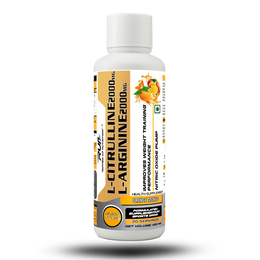
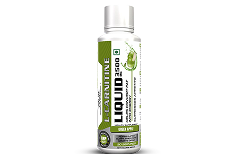
Liquid L-Citrulline + L-Arginine + Taurine — 2,000mg citrulline, 2,000mg arginine and 800mg taurine per serving, completely caffeine-free. The liquid format is easy to take and sits lighter than a thick powder shake.
For morning runs
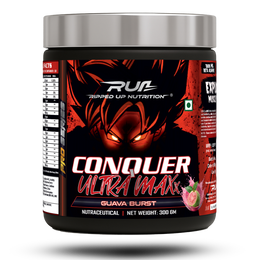
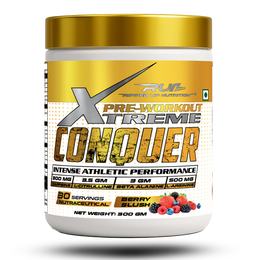
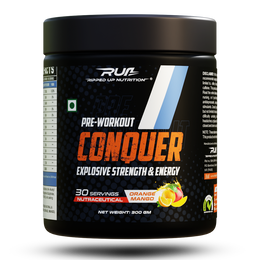
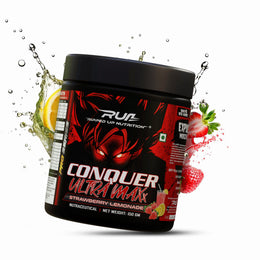
Conquer Pre-Workout — our everyday stimulant pre-workout for energy and focus. New to pre-workout? Start with half a serving.
For long runs
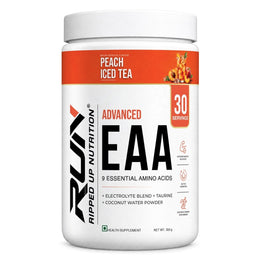
EAAs Hydration Matrix — all 9 essential amino acids with hydration support, light enough to sip during long sessions.
For hot days
RUN Hydration Electrolyte Tablets — drop one in your bottle to replace the electrolytes you lose in sweat.
Compare all options in our pre-workout collection.
How to Take a Pre-Workout Before a Run
- Time it: take it 20–30 minutes before you start (up to 45 minutes for a powder with caffeine).
- Start small: try half a serving first to see how your body and stomach respond.
- Never try something new on race day. Test it on at least two or three training runs first.
- Hydrate: drink water with it, and add electrolytes if it's hot or you're running long.
- Eat for long runs: for runs over an hour, add a light carb snack such as a banana. See what to eat 30 minutes before a workout.
Common Mistakes Runners Make
- Taking a full stimulant dose on top of morning coffee.
- Using a lifting pre-workout right before a long run and getting an upset stomach.
- Skipping electrolytes on hot, humid days.
- Relying on a pre-workout instead of eating properly before long runs.
- Testing a new product on race day.
FAQs
Can I take a pre-workout before running?
Yes. Many runners use one, especially for tough sessions. Choose a formula that suits your run time and caffeine tolerance, and test it in training first.
Is a caffeine-free pre-workout good for running?
Yes, especially for evening runs or if caffeine upsets your stomach. A citrulline-based formula supports training without stimulants.
Should I use the same pre-workout for a 5K and a half marathon?
Not necessarily. For short, fast runs, a stimulant pre-workout can help. For longer runs, hydration, electrolytes and carbohydrates matter more.
Is the tingling from beta-alanine harmful?
No. The tingling is a harmless, temporary side effect. If you dislike it, split your daily dose or choose a formula without beta-alanine.
This article is for general information. If you have a heart condition, high blood pressure, are pregnant or take medication, speak to your doctor before using a pre-workout.